
"Free"hold
Should you own the building you trade from?

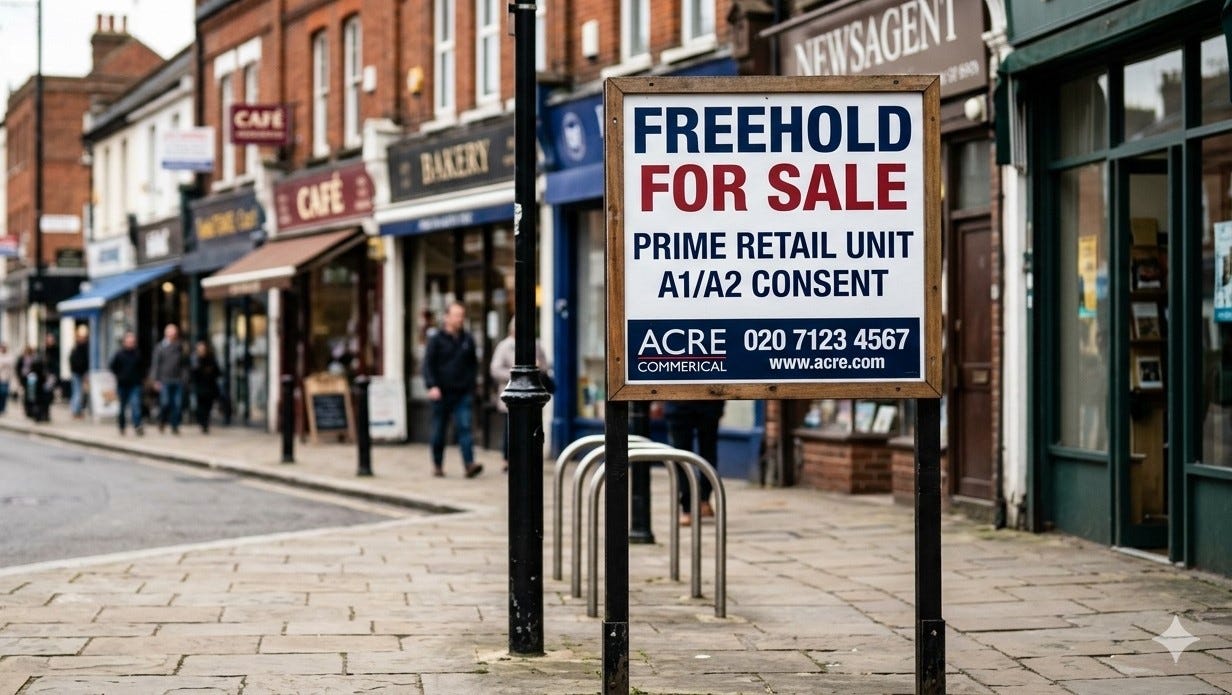
A discussion that emerged from last week’s post about NCP reminded me of a topic which comes up a lot when discussing the fate of distressed retail and hospitality businesses.
Surely, the argument goes, the business would have been in a better state if it had never sold off the freeholds of the properties it operates from.
It’s an interesting point and also often a controversial one, with big programmes of “sale and leaseback” where a business sells the properties it operates from and becomes a tenant often cited as examples of cash-extraction that weakens a business.
In reality, however, the property ownership picture for retail and hospitality businesses in the UK is very mixed:
the large grocers tend to own quite a lot of the property they operate from, though the precise figure has varied up and down as they have bought and sold freeholds.
The same is true for pub, hotel and restaurant chains
But specialist retailers, in particular those operating from retail parks and shopping centres, tend to be leaseholders (not least because in many of those sites the freehold would not be for sale)
And for small independent retailers and restaurants the picture will be similarly mixed, with many high street freeholds owned by institutional or private investors but some definitely owned by the person or family operating the retail business inside.
So is there a ‘right’ answer? What are the pros and cons of owning the building(s) you operate from? Here are some thoughts:
The case for freehold
Whether you are a single site specialist retailer, a restaurant or a big chain, owning the properties you operate from can offer some real advantages:
Protection in a downturn - self-evidently, owning your property means not paying rent, and that can give a business a real cushion during a recession. Many of the large pub chains, for example, largely survived Covid shutdowns on the basis that they didn’t have a rent bill to pay and so could ‘freeze’ their businesses more easily. Contrast that with cinema chains who tend to operate on long leases, and have had to spend the years since Covid renegotiating those leases to avoid disaster.
A strong balance sheet - having the big asset of your property on your balance sheet gives you something you can borrow against relatively cheaply when you need to invest in your business or want to expand. That’s a model that has worked well for some businesses as they have looked to build a national chain - borrowing against the current freehold assets to buy new ones.
Flexibility within your property - owning the freehold of a business also means having complete control over what happens in it. Want to refit? Decide to turn the upstairs from storage space into more seating? You’ll still, of course, have to negotiate with the planning authorities but at least the overbearing landlord is you!
The case for renting
So what about the opposite model, where you never invest in property but just rent spaces from others? That has its advantages too:
Freeing up capital - if you own the freehold to your business then by definition you have quite a lot of capital tied up in the ‘property’ part of your business rather than the ‘retail’ part of it. The yield on commercial property (the return you’d earn if you just operated the property and rented it to someone else) is probably only about 5-7%. If your retail or hospitality business model is more profitable than that, then the logical thing to do is to withdraw capital from your property and invest it in your trading business. As stated above, you can do that by mortgaging the property but that comes with risks and fees - much better to sell the freehold and release that capital for a more profit-generating purpose.
A clearer view of business performance - arguably the biggest problem that occurs when businesses (especially big chains) own their own freeholds is that it gets much harder to really see how the trading part of the business is performing. Take the example of a retail chain that owns its freeholds and is currently making a £50m profit overall. If a clinical look at the property portfolio reveals that it could have made £60m just by renting those properties out to someone else, then what you’ve discovered is that more than 100% of the profit in the business really comes from the property - the retail trading business is actually costing you money to operate. In reality, it can be very difficult to separate out the ‘trading’ and ‘property’ returns, which means there is a danger that management does not spot when the retail business is going off the boil because the results are hidden in a more complex picture.
So what should you do?
With pros and cons on both sides, what might the answer be for your business? Should you keep any freeholds you have, buy more or streamline and become a purely leasehold business?
Here are some factors to think about:
The more exciting and fast growing your business, the worse the argument for owning the freehold. Why dilute your returns by investing capital into the steady but unexciting business of property when you could invest the same money expanding your core business faster?
The more cyclical your business, the better the case for owning the freehold. If downturns are likely to be lengthy, then the protection of not paying rent becomes more attractive.
The more clarity you want over your business results, the worse the case for a freehold. Arguably many UK retail chains (M&S is a good example) gradually began to underperform in the 80s and 90s but failed to notice because their accounts were buoyed by healthy returns from property - an oversight which took decades to repair.
The smaller your business, the better the case for owning the freehold. There are several retail sectors in the UK (furniture is a good example) where the very high market share taken by independents remains a mystery - how are they surviving in such a tough economy? The answer is often because they are small businesses who own the freeholds of their sites. They can weather a bad market and aren’t obsessed with releasing capital for expansion. As long as they earn enough to pay themselves, they can last indefinitely.
If you want to trade in certain places (most notably shopping centres and retail parks) then the answer will be out of your control - freeholds will not be available and renting will just be the cost of doing business there. For some sectors, then, where customer behaviour mandates being on retail parks, property ownership is not an option.
The answer, then, will depend on the type of business you operate, and on how you want to see your capital deployed. Owning no freehold increases the cyclical risk in a business, but owning too much risks limiting its ability to expand and grow.
That conclusion, by the way, also answers the question we began with. “Did that sale and leaseback programme structurally weaken the business”? The answer depends on whether enough capital was left in the business to enable it to expand and evolve as a leasehold operation. If you use the sale of freeholds simply to extract cash from a business and don’t leave it set up to grow (and yes, there are plenty of examples where that has happened) then don’t be surprised at the result.
At the same time, if you leave the freeholds in a business, you might be blinding yourself to what is really going on with the trading operation.
As ever, there is no one-size-fits-all.