
Parking fine
How did NCP go bust, and what does that mean for your business?

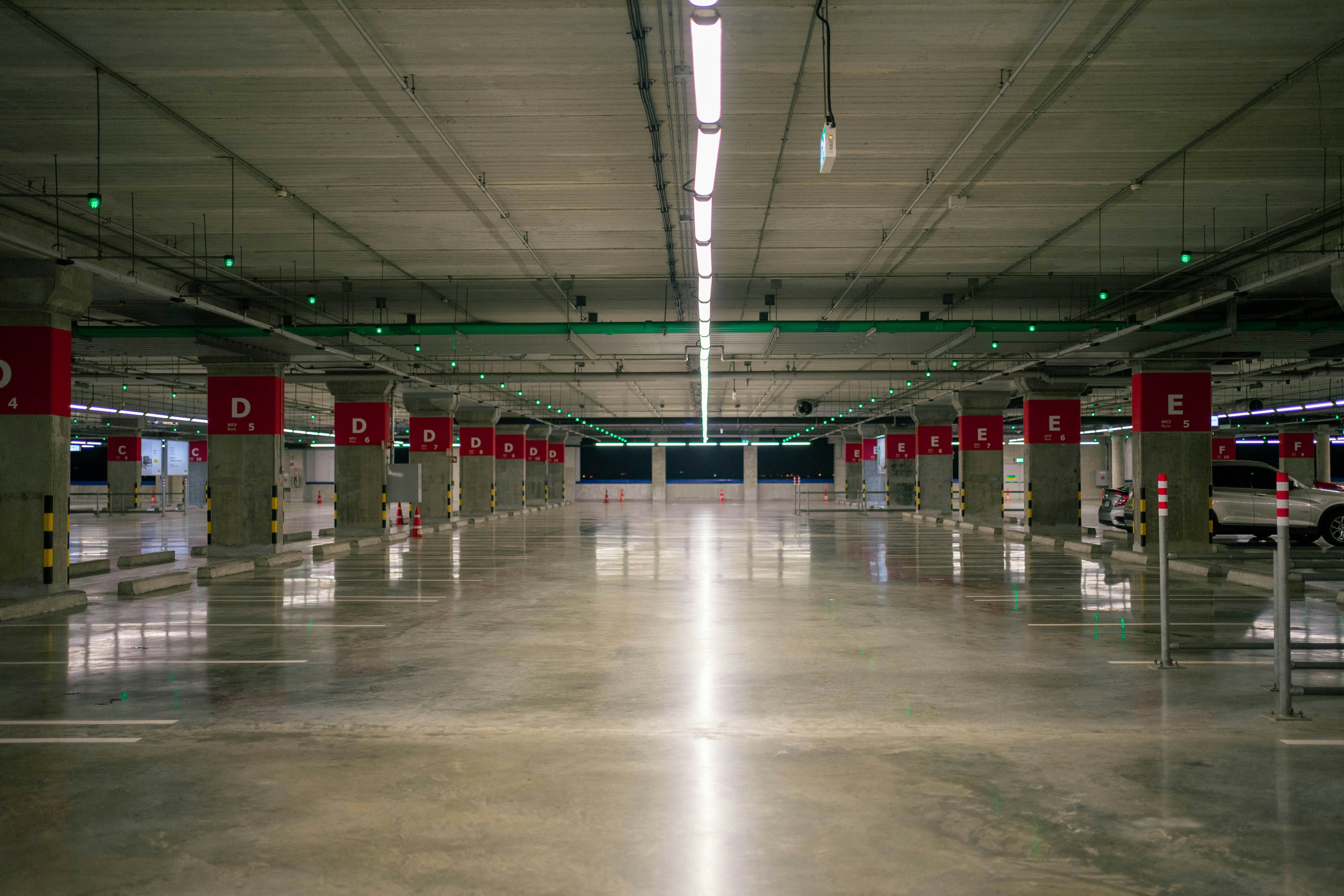
Business failures often prompt a lot of ‘where did it all go wrong’ head-scratching, and none more so than the administration this week of NCP, the largest UK operator of car parks.
On the face of it, how does a business that charges (a lot) per hour for car parking and operates sites with relatively few staff manage to end up insolvent? No surprise that commentary about the news has swung from blaming Covid, working from home, dubious financial engineering, the Government, the war in Ukraine, the war in Iran and a host of other prospective drivers of failure.
But what really happened, and what lessons can we draw from the story? Having had a little dig through the numbers, I think there are three factors behind the NCP failure, each of which offer food for thought to any of us in consumer businesses.
Fixed costs
The first driver (if you’ll pardon the pun) of NCP’s failure is a familiar one to anyone operating a retail or hospitality business - the concept of Operational Gearing.
In a nutshell, this is a measure of how ‘fixed’ your costs are. The higher the proportion of your costs which you will incur anyway regardless of how much business you do, the higher your Operational Gearing.
That can be a really positive thing when times are good. As a car park operator, most of your cost will be the rent, rates and utilities on the property you operate. Once you’ve taken enough parking fees to cover those costs each incremental fee will be almost pure profit. In boom times, a business with high operational gearing can see its profits rise very fast indeed.
The problem, of course, is the downside when business is tough - if you don’t have enough business to cover your costs, you will spiral into losses very quickly. In other businesses where costs are more variable the challenge of a downturn is offset by the fact that costs go down when revenues drop. The car park, on the other hand, can’t reduce its cost base so easily - if the number of parking sessions goes down then it quickly becomes unprofitable.
And that brings us to Covid - a huge downturn for any business but a massive headache for anyone with high fixed costs. For NCP, this is clear from its accounts. In 2019 it had revenue of £226m but made a gross profit (before admin and other costs) of just £11.4m, or about 5.1%. That’s not the bottom line, that’s just the revenue less the cost of sales, which in this case will mostly be the cost of leasing and running the sites.
Wind forward to 2021 in the teeth of Covid and revenue has dropped to only £118m as everyone stays at home. The cost of sales has also dropped, to be fair, but not by nearly as much as revenue - so that £11m gross profit has turned into a (£35m) loss.
Now fixed costs are not necessarily fixed for ever. Over the following couple of years the business did a good job of trying to re-engineer its costs (mostly renegotiating leases) to better match this new normal - by 2023 it had £186m of revenue - not back to normal but getting there, and made a £31m gross profit.
It is fair to say, then, that operational gearing was a real headache for this business given the downturn generated by Covid, but it wasn’t fatal by itself as the business worked hard to match its costs and revenues. At gross margin level, the business was just about back to being a sustainable one at the point where it went under.
So if this isn’t enough by itself, what really went wrong? For the next layer in our story, we need to look a bit further down the P&L.
The cost of doing business
A P&L shows revenue, then deducts the direct cost of sales to get to Gross Margin - but we still have a long way to go before we get to the bottom line profit number.
Look further down the P&L and you’ll find some version of “Selling, general and administrative costs” - in other words, the cost of actually running the business. In the case of our car parking business, if the cost of leasing the property is accounted for in the Gross Margin, then the cost lines below that are basically the costs of the Head Office, the marketing budget and other ‘central’ costs.
The issue here is that these central costs also contribute to that Operational Gearing - if they are treated as fixed and don’t shrink along with the revenue.
It is easy to see that when looking at the P&Ls of retail businesses. When a business starts with 2 or 3 stores it is usually managed from the founder’s house or an office in the back of one of the stores. By the time, though, it has expanded to 300 stores across the country it will have a big head office and teams of specialists doing everything from brand marketing to filing the accounts. But it will also be big enough that it is generating enough margin to pay for that head office.
There is, though, an ‘uncomfortable middle’ (which for many retailers sits between 50 and 100 stores) where the business is big enough to NEED the head office but isn’t big enough to be able to PAY for it. A common growing pain I see a lot is when small successful brands start to expand and hit this awkward size - if they don’t have the investment funding to push through to scale they can get into trouble.
What happens to NCP when you look at the accounts is that they arrive back in this ‘uncomfortable middle’ size by accident. Covid shrinks the revenue in the business and so the total cash margin being generated is lower than it was. The underlying administrative costs, however, don’t go down - if anything, they seem to increase over time. Specifically, the headcount labelled in the accounts as ‘managerial and clerical’ actually rises over time and is 50% bigger by 2023 than it was in 2019.
It isn’t clear what the driver for that increase is, but it is a critical problem for the business because it means that even with all the successful renegotiation of property leases, the business is spending too much of its margin on central costs and not generating the cash it needs.
Even then, though, the business was still generating a small positive operating profit by 2023 - not as much as it should have been, but not a loss. So why the collapse into administration? To find out, our final step is from the P&L to the Balance Sheet.
Debt burden
NCP is owned by a Japanese parent company Park24. Like many conglomerate businesses, Park24 had a complicated financial structure connecting its subsidiaries. NCP both was a lender to the rest of the group and also borrowed from it as cash flowed around the business. Critically, however, for most of its life the debt it owed to its parent was interest free. In 2022 that changed, however, and the debt became interest bearing. As base rates climbed from 2022 into 2023 (thanks Liz) the interest payments on that debt became much bigger - meaning that even though the business generated a positive operating profit all of that and more was swallowed by the interest bill and the business made a bottom line loss.
Nefarious financial engineering, then? Not really. The parent group in Japan is itself struggling financially and the change in the nature of the debt was probably just an inevitable consequence of the broader financial restructuring going on in the overall group.
To make matters worse, a change in Japan’s accounting standards which is due in 2027 would have forced the parent company to recognise all of the NCP future lease liabilities on its group balance sheet, complicating the rescue efforts even more.
NCP in a nutshell
It seems clear, then, that the real story is that the Japanese parent company bought NCP expecting to run a stable business generating cash returns from an established portfolio of sites. Instead, Covid happened and the business became an increasing problem. Park24 had to write off its investment in NCP entirely and clearly eventually made the decision to cease funding it and allow to fail as the lesser of two evils.
Interestingly, when you play with the numbers it looks like any two of the three things that hit NCP (Operating Gearing on leases, bloating admin costs and high interest rates on its debt) would have been survivable, but the combination of all three together just made the business unviable.
That is unlikely to be the end for NCP, however, as there is clearly still a good return to be made from operating some of these sites - one can only hope for the staff and suppliers of the business that a new NCP emerges from the financial ashes of the old one.
So what?
I suggested at the beginning of this piece that there were lessons for all of us from the NCP story. So what should we take out from all of this? Here are a few thoughts:
Beware of operational gearing - do you have a clear view of which of your costs are fixed and which truly variable? As we enter a more and more unstable world this is an important analysis.
Challenge every ‘fixed’ cost - once you have a view of the apparently fixed costs in your business, try to figure out how you can vary them anyway. As NCP showed, leases can be renegotiated, for example. No-one gets out of bed in the morning looking to have difficult conversations about varying contracts or walking away from liabilities, but when the alternative is your business failing it is worth picking up the phone.
Be aware of your central costs - don’t get into the ‘uncomfortable middle’ if you can avoid it - make sure your central costs are appropriate to the size of your business. This is, of course, an area where emerging technologies can make a huge difference so make sure you are exploring and taking advantage of all of them. The alternative is simply that your competitors will do it to you.
Keep a close eye on debt. We have decisively moved now from a long period of very low interest rates into a period of higher, and less stable ones. Debt is not, in itself, a bad thing as it allows you to expand your business and invest for the future. A keen eye, though, on the right level of debt for your business is essential, however, as is a backup plan for when times are tough. As many businesses know from bitter experience, the same downturn that reduces your ability to pay the interest on your loans is also likely to be the one that prompts your bank to want to stop lending to you, and it is the combination of those two factors which has finished off many businesses.
Running a car park, you’d think, should be simple and in many ways it is. NCP, however, offers a range of lessons for all of us in business. As I wish the teams across the business well for what comes next, I also suggest to everyone reading this that they learn those lessons. Caveat parker.
Interesting analysis, Ian. There are many questions left unresolved: Why such a low pre-Covid GM? Why interest free debt pre-2022? Why SG&A bloat post-Covid? This looks like a business that was surprisingly weak and ill-positioned to survive any shocks.
Great article Ian. Really enjoyed it and the lessons it clearly paints