
The day after tomorrow
Running a business in the post-Budget future

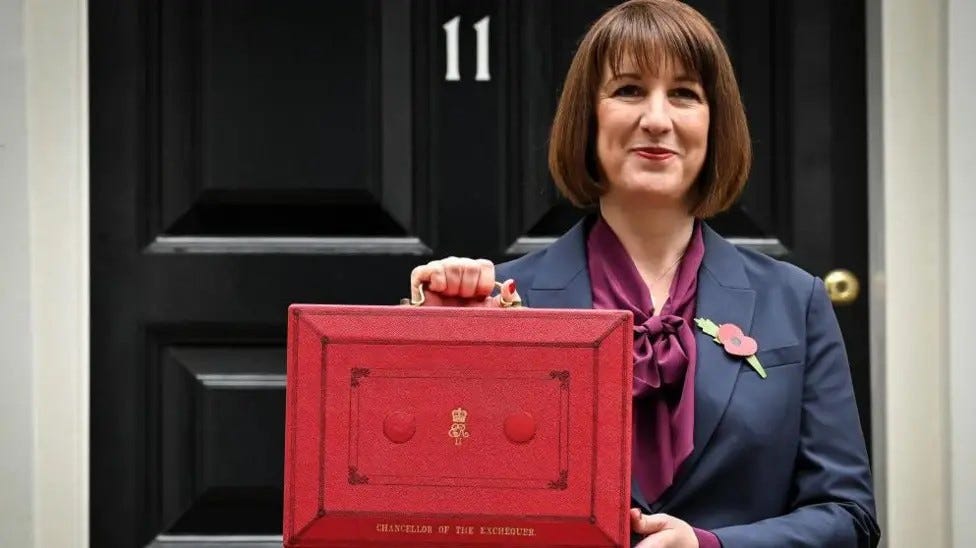
The press this week is understandably full of articles urging the Chancellor to do this or that in the Budget tomorrow. Whether that is “please tax the rich” messages from the Trades Unions, “please don’t tax the rich” messages from, well, the rich, or “please don’t tax us” messages from various industry trade bodies, there is a long queue of people keen to get their last push in before the big day.
Most of that, of course, is too late as even given the slightly chaotic nature of this year’s budget preparation it must be mostly done by now. Indeed some of the messaging can best be read as political positioning for the post-Budget inquests.
For those of us in businesses, however, that time has largely passed, and the best thing we can do is consider how to deliver our plans and execute our strategies for the remainder of this year and next, given what is likely to be the political and economic climate. (And for those of us in consumer businesses, that’s a particularly pressing topic given that Black Friday is this week - I wish good fortune to anyone navigating a big trading peak this week).
As is ever the case, the best option in a world of uncertain futures is to plan for the worst and hope for the best. Taking that approach, then, here are some things that management teams should have on their 2026 check-lists:
Growth will remain low
Obviously it will be lovely if that turns out to be too pessimistic, but it is hard to see much sign of any of the likely outcomes from tomorrow suddenly turning on the taps. As we discussed in last week’s post, much of our economic sluggishness can be traced back to weak consumer confidence and I doubt a wave of “here are all the things Reeves has done wrong” coverage in the coming weeks will do much to change that. We should plan for an environment which has seen weak footfall and limited growth in spending to continue, and trim our sails accordingly.
The costs of doing business will rise
In addition to another increase in the Living Wage (which most forecast will be more moderate than in recent years), we can expect the indirect costs of doing business to be hit hard by, amongst other things, the impact of the forthcoming Employment Rights bill, which will likely increase the cost of getting a hiring choice wrong and result in businesses needing to be much more cautious about who, and how many, they take on. Lobbying on the final nature of the bill continues, but the pressure on the Government from their union backers will certainly mean that some of the changes that the business community has campaigned hard against will happen anyway.
Government spending will remain high
The big strategic choice that the Government really made in its first budget has probably generated too little discussion - it pushed up capital investment in the public sector hugely, and tomorrow’s budget will probably do even more of that.
That’s a mixed blessing for businesses. In the long run, a stronger state, better infrastructure, better transport links and a healthier population are all good for business. In the short run, all that spending creates opportunities, not just for businesses that trade directly with the public sector but also for those whose customers benefit too.
The other side of the equation, of course, was the reality that the bill for all of that spending last year largely fell on business, and particularly on consumer facing businesses like retail and hospitality, with inevitable impacts on employment and resulting in a great deal of private sector investment being postponed. This sense that an increase in the size of public sector investment can ‘crowd out’ private sector growth has been very evident in our economy over the last year and we can only hope is a lesson learned for the Treasury team.
The consumer, though, can be persuaded to spend
As we’ve reported here at Moving Tribes several times this year, there are still businesses out there doing well and reporting strong results. The lasting impact of this long period of suppressed demand has been a growing gap between the winners and losers on the High Street (and in other sectors).
If your offering is a strong one, well tuned to your target customer segment and well delivered by your colleagues across the business, growth is still there to be had. I’ve spoken to many businesses who have turned a long period of declining footfall into revenue growth by selling more things, more of the time, to the customers who do turn up.
That growth is just harder to come by that it once was. I’m reminded a bit of those property renovation shows in the 1990s where someone would do up a house and then brag about how much its value had increased. The reality was that all property prices were increasing, whether the renovation was any good or not. Nowadays, with a stagnant property market, you’d have to work much harder and be much shrewder to add value with a renovation (and surprise surprise, all those shows have vanished).
That’s the reality of business in this climate - a point of growth now is worth much more, and is much harder to get, than it once was, but it is still an attainable goal for businesses doing the right things.
This last point, then, is the one I’d encourage any business leadership team to take from this week’s budget noise. Don’t hope for a dramatic change of direction or a sudden boost in economic growth. House building is not going to suddenly jump up, those big public sector investment programmes will take time to deliver and consumer confidence is likely to remain subdued. With the added risks of a bursting of the AI bubble across the pond, a weak US economy leading to even more random tariff wars and the continued efforts of the Russians to destabilise Europe this is not a time for baseless optimism.
It is, though, a time for businesses do focus on doing what they do, as well as they possibly can. This is, as far as affordable, the time to be investing in innovation, in colleague training and development, in customer service and in customer experience. Growth, for your business if not for the wider economy, is out there - it just needs more than ever to be earned.
Great article - down to earth and to the point!